
“Our goal is to build a lasting network in the field of digital assets based on trust, expertise, and collaboration across national and professional boundaries.”
The intersections between traditional wealth management, digital assets, and international wealth structuring continue to gain significance. Entrepreneurs, family offices, and high-net-worth individuals, whose assets derive wholly or partly from the digital assets sector, are facing questions that go far beyond mere portfolio allocation: regulation, custody, asset protection, liquidity, succession, and the selection of a reliable financial center are coming more into focus. In an interview with FINANZPLATZ FRANKFURT, Markus Schwingshackl, an attorney and founder of Centro LAW in Zurich, explains why the Swiss financial center plays a special role in this context. It’s about combining innovative strength with legal certainty, addressing the needs of new generations of wealth, and the Private Key Network (PKN), which aims to bring together experts in private wealth, digital assets, and artificial intelligence on an international level. A dialogue on financial centers, trust, specialized knowledge, and new forms of collaboration in wealth management.
Hill: What does the Swiss financial center stand for in the field of digital assets?
Schwingshackl: In the field of digital assets, the Swiss financial center stands for specialized wealth management within an institutionally reliable framework. Over the years, a comprehensive range of services has developed, as it was recognized early on that digital assets are not merely a portfolio allocation for a growing number of entrepreneurs and investors, but often form the foundation of their wealth.
Trading, custody, lending, and staking are offered worldwide in a wide variety of forms, but the reliability of the regulatory framework varies just as much. This is precisely where Switzerland comes in, by combining innovation with legal certainty.
In addition to security, the performance and innovative strength of the infrastructure, transaction processing, and the generation of liquidity and returns also play a role in determining where wealth management strategies are implemented. Switzerland can draw on its leading expertise in international wealth management. This is complemented by a long-term perspective, particularly through the inclusion of wealth transfer to the next generation, which is becoming increasingly important as digital assets become a permanent component of wealth.
This creates a blend of traditional and modern wealth management that takes into account the specific volatility and liquidity aspects. Additionally, the Swiss financial center is characterized by the close and seamless collaboration among various service providers—a decisive factor in solving complex, client-specific problems even in niche areas.
Hill: What are the specific challenges for asset owners regarding digital assets?
Schwingshackl: The central issue remains regulation. Despite the progress made in recent years, entrepreneurs in this sector continue to face significant risks. For asset owners, the location of custody and the ownership structure employed are key elements that must also be considered from a regulatory perspective to ensure the security of digital assets. Accordingly, asset protection is regularly high on the wealth planning agenda for both groups.
Furthermore, some of the challenges are similar to those faced by traditional asset owners. The current macroeconomic situation appears to be driving a search for stability to manage risks. International mobility has also gained in importance, and people are consciously preparing for potential developments such as trade conflicts, geopolitical tensions, rising inflation, or a recession. In the current environment, correlations between asset classes are also being reassessed and strategic orientations reviewed.
Ultimately, it can be summarized as follows: Whether traditional or digital—entrepreneurs and wealth holders want to preserve and protect their wealth. The speed of change requires agility and new approaches to wealth management from all stakeholders.
Hill: Speaking of new approaches to wealth management, you’ve founded a network in the digital assets sector. What’s that all about?
Schwingshackl: The Private Key Network is an association of experts in the field of private wealth with a focus on digital assets and artificial intelligence. Over the years, the paths of international specialists in this niche have crossed time and again. Together with my co-founders, we actively promote exchange and collaboration to develop new approaches in wealth management.
Already, several hundred million people worldwide own digital assets, either directly or indirectly. A growing proportion of these individuals are considered high-net-worth. It is precisely this group that needs reliable, cross-border wealth management solutions, such as those our members are developing.
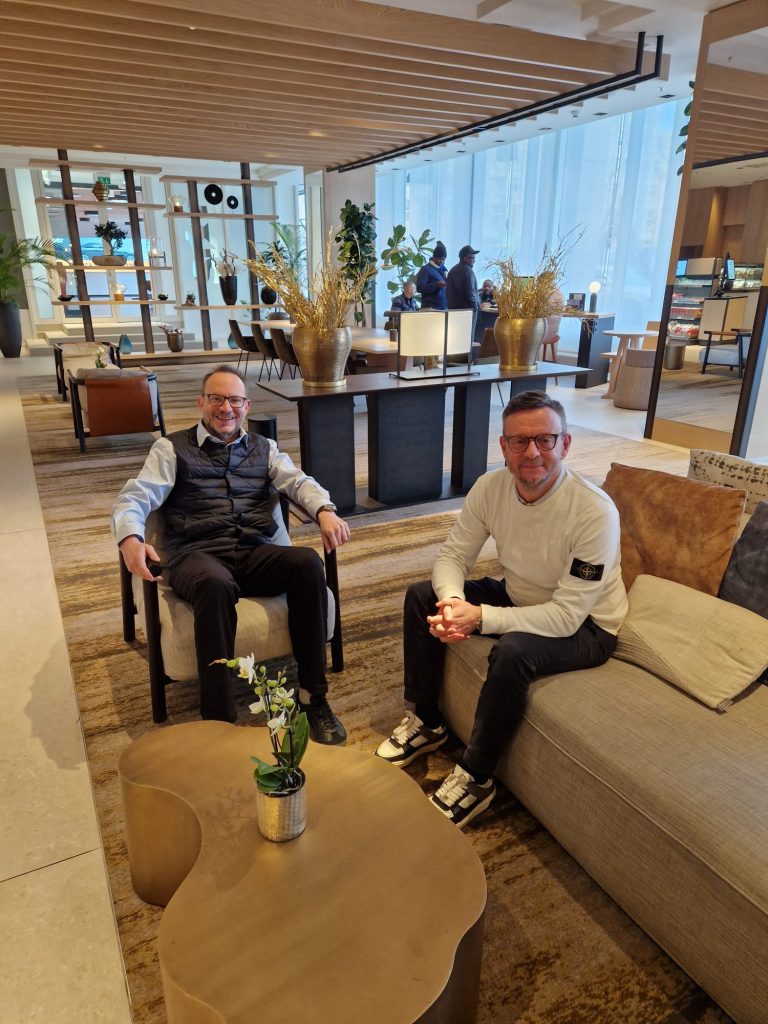
Our goal is to build a sustainable network in the field of digital assets based on trust, expertise, and collaboration across national and disciplinary boundaries. We recently held our first meeting in London and are planning the next event in June in Zurich. We deliberately keep the group of participants small, as relevance, not size, is our priority. In this way, perspectives from different disciplines come together to address specific issues.
Following our successful launch in Europe, we aim to expand to other regions in the medium term, particularly the U.S. Anyone with in-depth expertise, a collaborative attitude, and a passion for innovation is welcome to contact us.
Hill: I look forward to seeing you soon at your second PKN event on June 1 in Zurich and to the presentation by Adam Hayes from the Lucerne University of Applied Sciences and Arts (HSLU). Thank you very much for the interview.
Dialogue & Information:
FINANZPLATZ FRANKFURT AM MAIN on LINKEDIN – CHANNEL
FINANZPLATZ FRANKFURT AM MAIN on LINKEDIN – GROUP
FUND BOUTIQUES on LINKEDIN – CHANNEL
FINANZPLATZ-FRANKFURT-MAIN.DE, DACHLI Region & FONDSBOUTIQUEN.DE (2026) – Topics, Interests, Dialogue (Selection & “Snapshots”)
February 25, 2026, Frankfurt – “Frankfurt am Main Financial Center Meets Wealth Management”
(Markus Hill – Moderators: Christian Neuhaus – FINVIA, Sven Karkossa – Capitell Vermögens-Management AG, Noel Zeh – Wunderland Capital)
February 26, 2026, Frankfurt – “Forum for Digital Assets (FDV)”
Editorial Team – Special Feature “Frankfurt am Main Financial Center Meets Wealth Management & Digital Assets”
(Interviews / Guest Contributions, “Support” & MORE: info: markus-hill.com)
March 17, 2026, Frankfurt – Private Markets Excellence Forum – “Private Markets, Family Offices & Foundations – Due Diligence & Outlook 2026”
(Markus Hill – Fireside Chat: J. Paulo Dos Santos – Managing Director, VIRATIO GmbH)
Interview with Christian Hommens – SMART IMPACT INVESTING & PRIVATE MARKETS
Spring 2026: Investor Study “Preferences of Institutional Investors in Real Estate & Alternative Investments”
(Markus Hill – Moderator, Podcast: Sebastian Thürmer, “artis & x” – Example 2025)
April 16, 2026 – “köln let’s talk” – Bettina Timmler – Real Estate & Dialogue
(Media partnership)
May 12, 2026, Frankfurt: “Value Investing & Commodities & MORE”
(Markus Hill – Moderator & Short Introduction “Fund Boutiques & the U.S. Formula” – Alex J. Rauschenstein & Urs Marti, SIA FUNDS AG – FINANCIAL CENTER SWITZERLAND)
June 17, 2026, Zurich: Insights – “Family Offices & Fund Boutiques” – The Mountain Talks Summit – FUNDPLAT
(Presentation – Markus Hill)
November 10, 2026, Frankfurt: “Frankfurt am Main Financial Center Meets Liechtenstein Financial Center”
(Markus Hill – Moderator – LAFV Liechtenstein Investment Fund Association: Panel & Presentations)
Input, ideas, and suggestions on the above topics are welcome:
info@markus-hill.com / +49 (0) 163 4616 179
Photo: Pixabay
SOURCE: IPE D.A.CH