
India stands out not only for its extreme cultural diversity, aromatic spices, and traditions dating back millennia. As a BRIC country, it is growing faster than any other major economy and should therefore attract more attention from investors—not just for diversification purposes.
India’s nominal gross domestic product stands at approximately 4.2 trillion U.S. dollars, with a purchasing power parity of about 17.2 trillion. This makes India the fourth-largest economy in the world. With current economic growth of 6.4% according to the IMF, India continues to grow significantly faster than the global economy. The country on the Ganges will overtake other major economies in the coming years.
A key driver of growth is demographics: With a population of about 1.5 billion, India is the world’s most populous country. The median age is 28.1 years—significantly lower than that of China, Germany, and Japan. This young population creates potential for rising incomes, growing consumption, and a larger labor force over the coming decades.
Nationwide Digital Infrastructure
At the same time, India is still in an early stage of urbanization. In 2024, about 35.4 percent of the population lived in cities, while the proportion in China was about 66 percent and in the U.S. about 80 percent. Since 1960, India’s urban population has grown from 78 million to over 513 million people. The continued shift not only to Tier 1 cities but also to Tier 2 and Tier 3 cities will further drive productivity, consumption, and economic integration.
Digital infrastructure plays a particularly important role here: the Aadhaar biometric identity system covers approximately 1.4 billion people. Together with the Unified Payments Interface for cashless real-time transfers and the interfaces of the IndiaStack architecture, it forms the foundation for a cost-effective and interoperable digital financial system as well as digital business models. In 2023, 129.3 billion real-time transactions were processed in India—nearly 49 percent of the global volume.
Digitalization is also reaching ever-larger segments of the population. By 2025, India was estimated to have more than one billion Internet users. This makes the country home to the world’s second-largest Internet population after China. The comparatively low Internet penetration rate suggests further growth is likely, as each additional percentage point represents tens of millions of people. Digital payments have now become the norm in most parts of the country. At the same time, they are creating new opportunities for loans, insurance, and investment products.
A bank with 58 times more customers than the population of Switzerland
Access to financial services has also expanded significantly. The proportion of adults with an account at a formal financial institution rose from 35 percent in 2011 to 89 percent by 2025. Although about 16 percent of accounts remain inactive, the foundation for broader financial inclusion has been laid. The State Bank of India alone serves around 520 million customers—roughly 58 times the population of Switzerland.
India is also benefiting from the restructuring of global supply chains. As part of the “China+1” strategy, production capacity has been shifted to India. The country now manufactures about 25% of all iPhones worldwide. Smartphone exports reached $24.1 billion in the last fiscal year. At the same time, the domestic market is growing: The number of mobile phone subscriptions has risen from about three million in 2000 to nearly 1.2 billion by 2024.
100 New Airports Planned
In e-commerce, India’s potential is also largely untapped: The market is expected to grow from $70 to $80 billion in 2024 to $180 to $200 billion by 2030. Currently, only about 20 to 25 percent of Indian internet users shop online. Tier-2 and Tier-3 cities are experiencing particularly dynamic growth. They already account for more than 60 percent of e-commerce deliveries. Incomes in these cities are also growing faster than in the major metropolitan areas.
Physical infrastructure is being expanded in parallel. The national highway network grew by 61 percent over the course of a decade, reaching 146,560 kilometers. As of May 2026, India had 163 operational airports. The UDAN 2.0 program also calls for 100 new airports over the next decade. Improved roads, airports, rail connections, and ports are expected to make supply chains more efficient and support economic development outside major cities.
Ranked 3rd Globally in Installed Renewable Energy Capacity
Structural progress is also evident in rural regions. As part of the Jal Jeevan Mission, more than 158 million rural households have been connected to running water since 2019. This can reduce the time spent collecting water, improve health, and increase household productivity.
In terms of renewable energy, India ranks third globally in installed capacity. In the 2025–26 fiscal year, 55.29 GW of non-fossil capacity was added. Solar capacity has grown 53-fold since 2014. Non-fossil sources accounted for 29.2 percent of India’s electricity generation. Among fossil fuels, coal is the dominant energy source at around 96 percent, while the shares of oil and natural gas are minimal. This mix ensures a high degree of independence from geopolitical factors.
Most IPOs Worldwide in 2025
The increasing economic formalization is also evident in the capital markets. In 2025, $60.7 billion flowed into private equity and venture capital investments. At the same time, exits totaled $32.9 billion, and fundraising by Indian funds reached a historic high of $23.2 billion.
On public markets, India trades at a 53 percent valuation premium relative to the emerging markets average. However, an allocation consisting exclusively of publicly traded companies represents only a small and concentrated portion of the Indian corporate landscape. Less than one percent of companies are publicly traded. In 2025, India recorded 367 IPOs, ranking first globally.
The key opportunity lies in the combination of these trends: India is digitizing and formalizing its economy, continuing to urbanize, and expanding its infrastructure, while simultaneously boasting a young population and rising incomes. Listed investments capture only a limited portion of this development, whereas traditional private equity investments are often tied to long lock-up periods. This raises the question of how investors can best gain access to the full breadth of the Indian economy.
About the Author
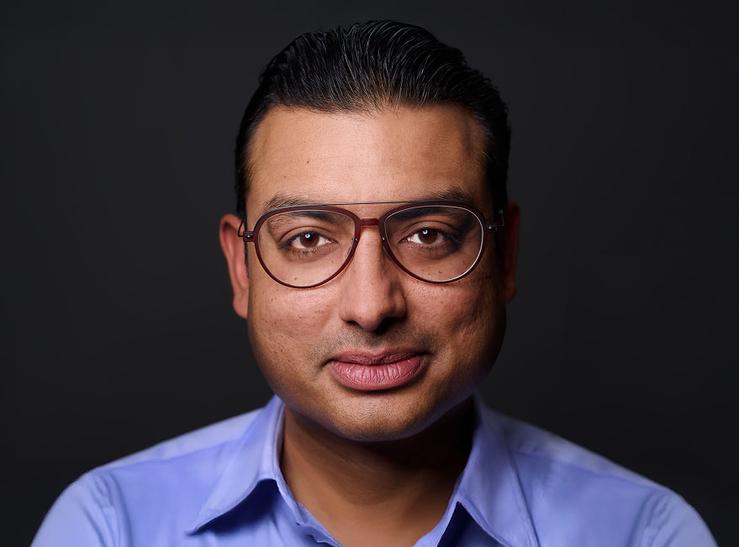
Nayan Srivastava is a co-founder and managing partner of RootBridge Capital. He also serves as the Swiss chief representative of the Indian Chamber of Commerce and advocates for stronger economic ties between Switzerland and India. His conviction: What was once the “ ” American dream is now the Indian dream. The real growth story is unfolding in the SME sector.
Dialog & Information:
FINANZPLATZ FRANKFURT AM MAIN auf LINKEDIN – KANAL
FINANZPLATZ FRANKFURT AM MAIN auf LINKEDIN – GRUPPE
FONDSBOUTIQUEN auf LINKEDIN – KANAL
FINANZPLATZ-FRANKFURT-MAIN.DE, DACHLI-Region & FONDSBOUTIQUEN.DE (2026) – Themen, Interessen, Dialog (Auswahl & „Snapshots“)
25.2.2026, Frankfurt – „Finanzplatz Frankfurt am Main meets Wealthmanagement“
(Markus Hill – Moderation: Christian Neuhaus – FINVIA, Sven Karkossa – Capitell Vermögens-Management AG, Noel Zeh – Wunderland Capital)
26.2.2026, Frankfurt – „Forum für Digitale Vermögenswerte (FDV)“
Redaktion – Themenspecial „Finanzplatz Frankfurt am Main meets Wealthmanagement & Digital Assets“
(Interviews / Gastbeiträge, “Support” & MORE: info: markus-hill.com)
17.3.2026, Frankfurt – Private Markets Excellence Forum – „Private Markets, Family Offices & Stiftungen – Due Diligence & Ausblick 2026”
(Markus Hill – Fireside Chat: J. Paulo Dos Santos – Geschäftsführer, VIRATIO GmbH)
Interview mit Christian Hommens – SMART IMPACT INVESTING & PRIVATE MARKETS
Frühjahr 2026: Investorenstudie „Präferenzen institutioneller Investoren bei Immobilien & Alternative Investments“
(Markus Hill – Moderation, Podcast: Sebastian Thürmer, “artis & x” – Beispiel 2025)
16.4.2026 – „köln let’s talk“ – Bettina Timmler – Immobilien & Dialog
(Medienpartnerschaft)
12.5.2026, Frankfurt: „Value Investing & Rohstoffe & MORE“
(Markus Hill – Moderation & Kurzintro „Fondsboutiquen & USA-Formel“ – Alex J. Rauschenstein & Urs Marti, SIA FUNDS AG – FINANZPLATZ SCHWEIZ)
17.6.2026, Zürich: Insights – “Family Offices & Fondsboutiquen” – The Mountain Talks Summit – FUNDPLAT
(Vortrag – Markus Hill)
10.11.2026, Frankfurt: „Finanzplatz Frankfurt am Main meets Finanzplatz Liechtenstein“
(Markus Hill – Moderation – LAFV Liechtensteinischer Anlagefondsverband: Panel & Vorträge)
Input, Ideen & Anregungen zu den oben genannten Themen sind willkommen:
info@markus-hill.com / +49 (0) 163 4616 179
Photo: Pixabay